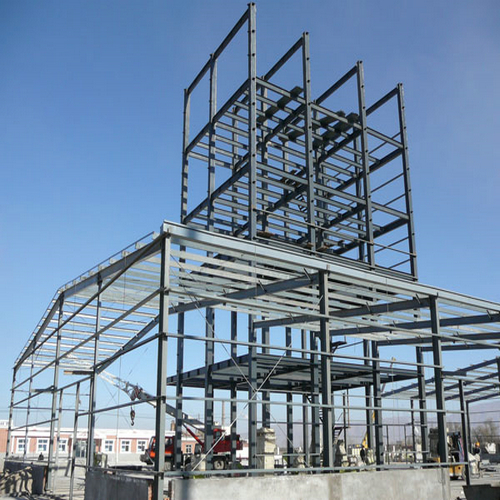
The demand for efficient parking solutions in dense urban environments is driving adoption of prefabricated steel parking structures. These systems offer rapid installation, design flexibility, and long-term durability for municipalities and private developers facing space constraints.
Manufacturing facilities now produce complete parking garage components with integrated vehicle safety features. Steel columns arrive on site with pre-installed bollard mounts and corner guards. Precast concrete deck sections, fabricated concurrently with steel framing, include integral curb stops, drainage channels, and pedestrian walkway demarcation completed before delivery to the job site.
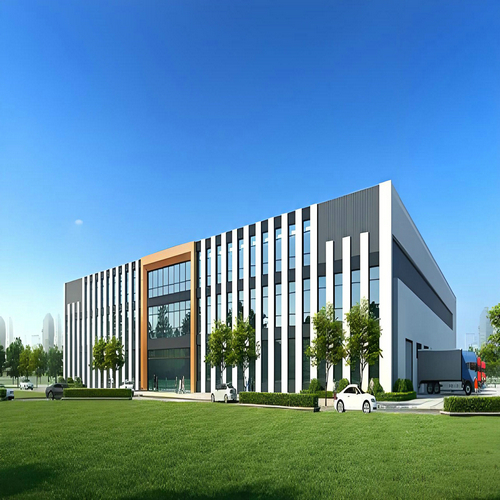
Assembly speed is critical for urban projects where construction disruption must be minimized. Prefabricated steel parking structures can be erected at rates of one to two full levels per week using conventional mobile cranes. The rapid enclosure allows vehicle access to lower levels while upper levels are still under construction, providing partial occupancy months ahead of conventional schedules.
Traffic flow optimization is incorporated during component fabrication rather than modified after installation. One-way circulation patterns are reinforced through steel framing configurations that naturally guide vehicle movement. Entrance and exit lane separators are pre-welded to column assemblies, eliminating separate barrier installation.
Security integration begins at the manufacturing stage with pre-installed conduit pathways for surveillance cameras, lighting controls, and access systems. Steel members include mounting provisions for license plate recognition cameras positioned at entry and exit points. Emergency call station locations are coordinated with column spacing to ensure complete coverage without field adjustment.
Fire protection for open parking structures is achieved through structural design rather than active systems. Steel members receive fire-resistive coatings calibrated to building code requirements for unprotected parking construction. Ventilation openings are pre-framed into spandrel beams at spacing determined by smoke management calculations completed before fabrication.
Seismic performance for parking structures in earthquake-prone regions is enhanced through prefabricated moment connections that provide predictable energy dissipation. Bolted joints with pre-tensioned assemblies maintain structural integrity during ground motion while allowing controlled movement at connection points. Testing confirms that prefabricated systems meet or exceed field-welded alternatives for seismic applications.
Lighting integration is streamlined through pre-installed raceways within steel roof framing. LED fixture mounting plates are welded to structural members during fabrication, positioned according to illumination calculations for uniform light distribution. Daylight harvesting through open perimeter designs is optimized through steel spandrel depths that balance vehicle containment with natural light penetration.
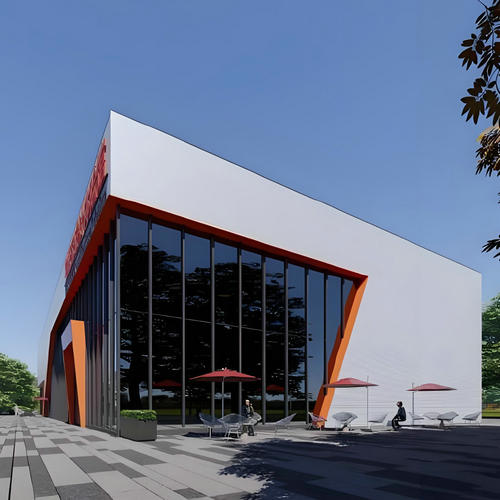
Durability in vehicle-intensive environments is achieved through galvanized coating systems applied before fabrication. Steel members receive zinc-rich primers and topcoats that withstand exposure to road salts, deicing chemicals, and vehicle emissions. Testing confirms coating adhesion through accelerated weathering cycles simulating decades of parking structure exposure.