

Advanced manufacturing facilities now produce warehouse building components at industrial scale. Long-span steel trusses are fabricated in sections that bolt together on site, achieving clear spans exceeding 80 meters without interior columns. Tapered column sections are manufactured with integrated crane runway brackets and conveyor support attachments based on facility-specific material flow requirements.
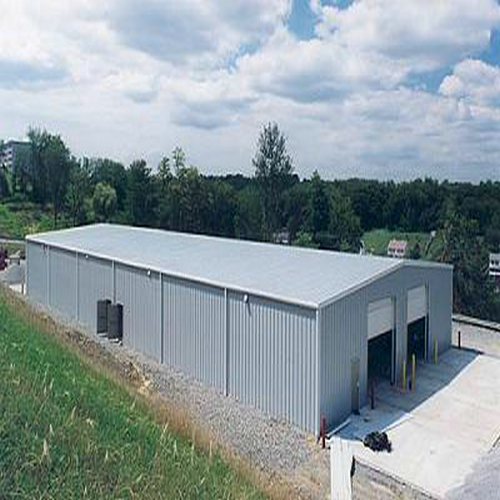
Automation integration begins during component fabrication rather than after building completion. Steel members include pre-welded mounting plates for automated storage and retrieval system rail supports. Floor embed plates are coordinated with column base locations to ensure precise alignment between structural grid and robotic equipment pathways. This prefabrication approach eliminates the costly field drilling and anchoring typically required for automation installation.
Dock equipment coordination is streamlined through pre-engineered steel sections that form complete loading bay assemblies. Leveler pits, shelter frames, and bumper supports are fabricated as integrated units that arrive on site ready for installation. Hydraulic and electrical connections are pre-stubbed within steel members, reducing field rough-in requirements.
Floor flatness requirements for automated guided vehicle operations are addressed through coordinated structural design. Steel framing spacing is optimized to minimize deflection between supports while maintaining economic material usage. Composite floor systems achieve the flatness tolerances required for high-bay automated equipment without post-construction grinding or leveling compounds.
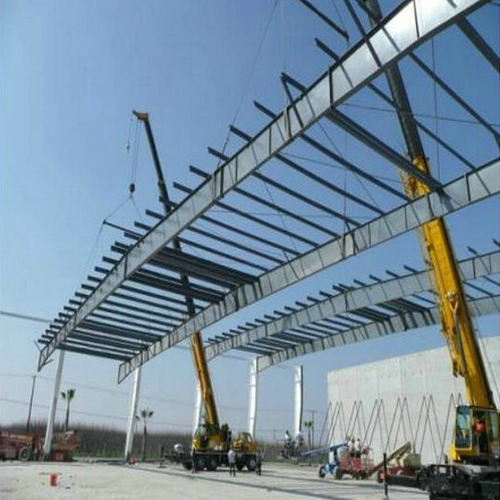
Vertical storage optimization begins with roof structure design that accommodates tall racking systems. Steel framing is configured to support ceiling-mounted fire suppression and lighting systems at heights exceeding 40 meters. Integrated catwalk systems for rack maintenance are pre-fabricated and attached to steel columns during manufacturing.
Energy performance is enhanced through insulated panel systems factory-attached to girt members. Continuous insulation layers achieve thermal resistance values required for temperature-controlled storage while maintaining the rapid assembly characteristics of prefabricated construction. Reflective roof coatings are factory-applied to standing seam panels before delivery.
Fire protection integration occurs during component fabrication rather than field installation. Steel members receive intumescent coatings calibrated to hourly ratings required by storage occupancy classifications. Sprinkler system hangers and seismic bracing attachments are welded to steel before delivery, reducing field installation labor.
Construction logistics for mega-scale warehouses are managed through coordinated delivery sequencing that matches component arrival with erection progress. Multiple erection crews work simultaneously on different building sections, with material delivered directly to each crew's work area. This approach eliminates material re-handling and accelerates overall schedule.
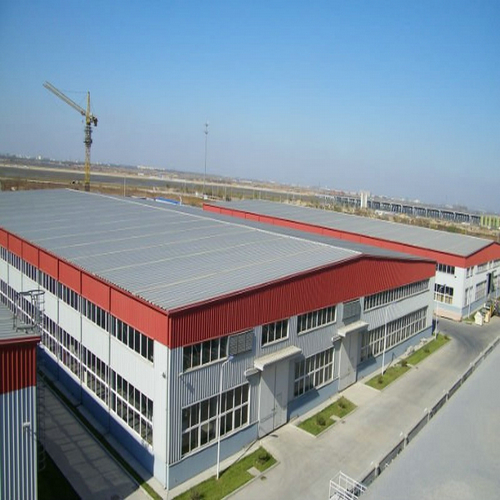
Site coordination between building structure and exterior improvements is achieved through integrated digital models shared across all trades. Foundation, steel, paving, and utility contractors work from the same three-dimensional model, ensuring that anchor bolts, floor drains, and underground conduit stub-ups align with prefabricated steel components.
As same-day delivery expectations drive demand for urban fulfillment centers, prefabricated steel warehouse systems are evolving to serve constrained infill locations. Multi-story distribution facilities with truck access at multiple levels are now being prefabricated for dense metropolitan areas, enabling logistics operations to locate closer to customers while maintaining the clear spans essential for automated material handling.